
News Center
News
How to Choose the Right Waterproofing Agent: A Practical Guide for Concrete, Stone, and Masonry
2026-04-28
Walking into a hardware store or browsing online catalogs, the number of waterproofing products can be overwhelming. Sealers, coatings, repellents, membranes, silanes, siloxanes, acrylics, epoxies—each claims to be the best. Yet choosing the wrong product leads to peeling, efflorescence, freeze-thaw damage, wasted money, and frustrated clients.
The good news is that selecting the right waterproofing agent doesn't have to be complicated. By answering a few key questions about your project, you can narrow down the options and make a confident decision.
This practical guide walks you through the critical factors to consider when choosing a waterproofing agent for concrete, stone, or masonry.
Step 1: Identify Your Substrate (What Are You Protecting?)
Different materials require different approaches.
| Substrate | Key Considerations | Recommended Technology |
|---|---|---|
| Concrete (dense) | Low porosity, may have existing coatings or curing compounds | Silane (100%) for deep penetration |
| Concrete (lightweight/porous) | Higher absorption, may need more coverage | Siloxane or silane-siloxane blend |
| Brick | Variable porosity, mortar joints are critical | Siloxane or blend (breathable) |
| Natural Stone (granite, slate) | Dense, often polished; appearance critical | Silane (non-film-forming, invisible) |
| Natural Stone (limestone, sandstone) | Highly porous, staining-prone | Silane or siloxane (penetrating) |
| Cast Stone / Architectural Precast | Simulates natural stone; aesthetic value high | Silane or siloxane (invisible) |
| Wood | Fibrous, expands/contracts | Silane/siloxane blend or specialized wood sealer |
| Textiles (fabrics, awnings) | Flexible, requires soft hand | Reactive silicone fluids (e.g., hydrogen silicone oil emulsions) |
Step 2: Define the Exposure Environment (Where Will It Be Used?)
The environment dictates the level of protection needed.
| Environment | Key Threats | Required Features |
|---|---|---|
| Exterior vertical walls | Rain, wind-driven moisture, UV | UV resistance, breathability, water repellency |
| Exterior horizontal (decks, driveways) | Standing water, traffic, freeze-thaw, UV | Deep penetration, wear resistance, freeze-thaw protection |
| Below-grade (basements, foundations) | Hydrostatic pressure, constant dampness | Deep penetration, chloride blocking (if coastal), breathability |
| Coastal / marine | Chloride intrusion, salt spray | Excellent chloride barrier (silane), breathability |
| Freeze-thaw climates | Freeze-thaw cycles, deicing salts | Hydrophobic (eliminate pore water), salt-resistant |
| Industrial / chemical exposure | Acids, alkalis, solvents | Chemical resistance (silane or fluoro-silicone) |
| Interior (low exposure) | Spills, occasional moisture | Cost-effective, easy application |
| High-traffic (parking decks, plazas) | Abrasion, deicing salts, vehicles | Deep penetrating (surface protection not worn away) |
Step 3: Decide Desired Appearance (How Should It Look?)
Not all waterproofing agents are invisible. Choose based on aesthetic requirements.
| Appearance Goal | Recommended Product Type | Notes |
|---|---|---|
| Invisible (natural look) | Penetrating silane or siloxane | No color change, no gloss, no film |
| Wet look (enhanced color) | Solvent-based acrylic sealer or silicone resin | Adds gloss, darkens substrate; may yellow |
| Matte finish with slight water beading | Water-based siloxane emulsion | Low sheen, keeps most natural appearance |
| Glossy, high build | Epoxy or urethane coating | Forms thick film; not breathable |
| Color enhancement (no gloss) | Penetrating sealer with color enhancer | Some silicones offer light enhancement without gloss |
Important: If preserving the original appearance is critical (e.g., historic buildings, natural stone facades, exposed aggregate), always choose an invisible penetrating sealer (silane or siloxane).
Step 4: Understand the Trade-offs: Coating vs. Penetrating Sealer
This is the most important technical decision.
| Feature | Penetrating Sealer (Silane/Siloxane) | Surface Coating (Acrylic/Epoxy/Urethane) |
|---|---|---|
| How it works | Lines pores, no surface film | Forms film on surface |
| Breathability | Excellent (vapor escapes) | Poor (traps moisture) |
| UV resistance | Excellent (inherent) | Poor to fair (yellows, chalks) |
| Peeling/blistering | None | Common failure mode |
| Wear resistance | Not applicable (protection below surface) | Surface wears away |
| Service life | 10–25 years | 3–7 years |
| Appearance change | None | Adds gloss, may change color |
| Re-application | Simple (no removal needed) | Requires stripping old coating |
| Best for | Masonry, concrete, stone where breathability and longevity matter | Non-porous surfaces, decorative floors, high-abrasion areas |
General rule: For porous exterior substrates, always prefer a breathable penetrating sealer. For non-porous surfaces or where a glossy decorative finish is desired, a coating may be appropriate.
Step 5: Choose the Right Chemistry (Silane, Siloxane, or Blend?)
Among penetrating sealers, several chemistries exist. Here’s how they differ:
| Chemistry | Molecular Size | Penetration Depth | Water Repellency | Typical Service Life | Best Application |
|---|---|---|---|---|---|
| Silane (100%) | Smallest | Deepest (3–10 mm) | Excellent | 15–25 years | Dense concrete, bridge decks, below-grade, chloride protection |
| Siloxane | Larger | Moderate (1–5 mm) | Excellent (better beading) | 10–20 years | Masonry, brick, low-density concrete, vertical walls |
| Silane-Siloxane Blend | Mixed | Good (2–8 mm) | Excellent | 15–20 years | General-purpose, balanced performance |
| Silicone Resin (water-based) | Varies | Moderate | Good | 10–15 years | Masonry, stone (low-VOC, low-odor applications) |
How to decide:
Need maximum penetration (high-density concrete, chloride protection for rebar)? → 100% Silane
Need excellent water beading on brick or stone? → Siloxane
Want a balance of penetration and surface repellency? → Silane-Siloxane Blend
Working in a VOC-restricted or indoor area? → Water-based Silicone Resin or Water-based Siloxane
Step 6: Consider Solvent Type (Water-Based vs. Solvent-Based)
| Solvent Type | Pros | Cons | Best For |
|---|---|---|---|
| Water-based | Low VOC, low odor, non-flammable, easier cleanup | May not penetrate as deeply, can freeze | Indoor, environmentally sensitive areas, occupied buildings |
| Solvent-based | Deep penetration, faster curing, works in cooler temps | Higher VOC, flammable, stronger odor | Exterior, high-density concrete, cold weather application |
Step 7: Check Performance Specifications
Look for independent test data or manufacturer claims backed by standards:
| Specification | What It Measures | Typical Good Value |
|---|---|---|
| Water absorption reduction | ASTM C67, C1585 | ≥90% reduction vs. untreated |
| Chloride ingress reduction | ASTM C1202 (Rapid Chloride Permeability) | ≥80% reduction |
| Breathability (vapor transmission) | ASTM E96 | ≥80% of untreated |
| Penetration depth | Visual or dye penetration test | ≥3 mm for dense concrete |
| UV resistance | Accelerated weathering (QUV) | No cracking, no yellowing after 1000+ hours |
Step 8: Evaluate Practical Considerations
Ease of application: Spray, roller, or brush? Low-pressure spray is best for large areas.
Coverage rate: Typically 3–10 m²/L. Lower coverage = higher cost.
Drying/curing time: How long before rain or traffic? 24–72 hours typical for silanes.
Temperature range: Can you apply in current conditions (5–40°C ideal)?
Shelf life: Unopened products typically last 12–24 months.
Step 9: Compare Lifecycle Cost, Not Just Initial Price
A cheap sealer that fails in 2 years and requires costly removal and reapplication is more expensive than a premium sealer that lasts 20 years.
Example: 500 m² concrete parking deck
| Product | Initial Cost (approx) | Reapplication Interval | 20-Year Cost |
|---|---|---|---|
| Acrylic coating | $2,500 | Every 4 years | ~$12,500 (recoat 4x) |
| Low-grade siloxane | $3,500 | Every 5 years | ~$10,500 (recoat 3x) |
| Premium 100% silane | $7,500 | None (20+ years) | $7,500 |
Conclusion: A Systematic Approach to Selection
Choosing the right waterproofing agent doesn't have to be guesswork. Follow these steps:
Identify your substrate – concrete, brick, stone, or other
Define exposure – exterior, below-grade, coastal, freeze-thaw
Decide appearance – invisible, wet look, or gloss
Choose between coating and penetrating sealer – prioritize breathability for porous substrates
Select chemistry – silane, siloxane, or blend based on penetration vs. beading needs
Pick solvent type – water-based or solvent-based per project constraints
Verify performance specs – water absorption reduction, chloride blocking, UV resistance
Consider practical factors – application method, curing time, temperature
Calculate lifecycle cost – not just initial price
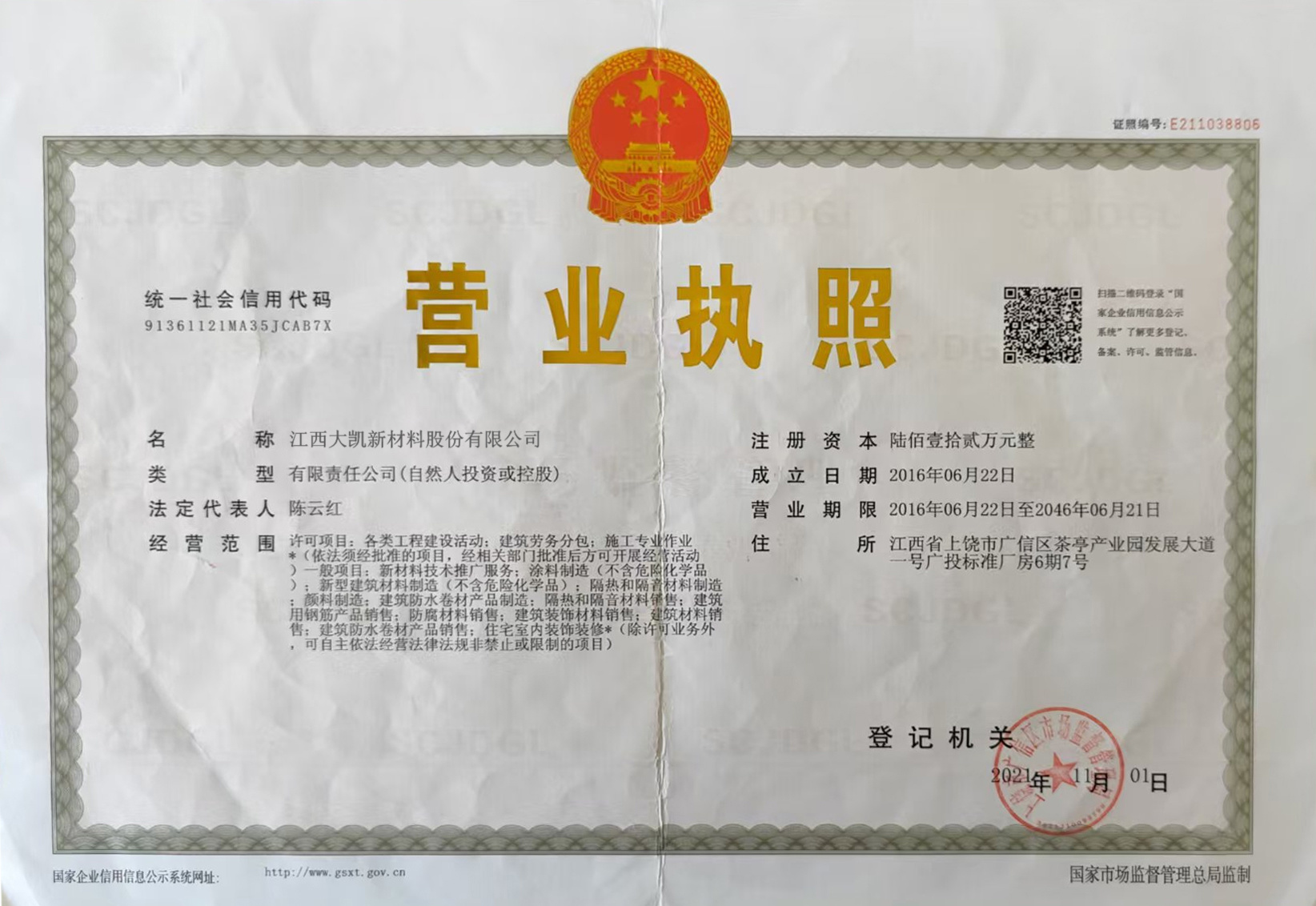
At Jiangxi Dakai New Materials Co., Ltd. , we offer a complete line of high-performance waterproofing agents, including 100% silanes, siloxanes, silane-siloxane blends, and water-based silicone resins. Our technical team can help you select the right product for your specific project.
Contact us for personalized recommendations or to request samples.
Related News

Understanding Silicone Hydrophobic Powder: Properties, Applications, and Benefits
--- Silicone hydrophobic powder is a specialized material designed to impart water-repellent properties to various surfaces and formulations. This hydrophobic nature arises from the unique molecular structure of silicone, which effectively reduces the surface energy of materials, minimizing wetting and enhancing moisture resistance. Due to its lightweight and non-toxic characteristics, silicone hy
2026-05-15
View Details
Unlocking the Potential of High Hydrogen Silicone Oil in Chemical Applications
High hydrogen silicone oil is an innovative and versatile compound widely utilized in various chemical applications. Its unique properties make it an invaluable resource in many sectors, particularly in the formulation of specialized products. This silicone derivative is known for its high hydrogen content, which contributes to its exceptional reactivity and versatility. One of the most significa
2026-05-15
View Details
Enhancing Durability: The Role of Gypsum Waterproofing Additives in Construction
In the construction sector, ensuring the longevity and durability of building materials is paramount. Gypsum waterproofing additives are specialized compounds designed to improve the water resistance of gypsum-based products. These additives play a crucial role in various applications, from drywall to plaster, making them an essential consideration for any construction project. Gypsum itself is a
2026-05-14
View Details
Understanding Potassium Methyl Silicate: Applications and Benefits in Chemical Industries
Potassium methyl silicate is an inorganic compound that has gained significant attention in the chemical sector due to its unique characteristics and versatility. As a silicate, it is primarily composed of potassium, silicon, and methyl groups, which contribute to its distinct properties. This compound is known for its excellent adhesion, weather resistance, and ability to enhance the durability o
2026-05-14
View Details
Jiangxi Dakai New Materials Co.,Ltd
Telephone:+008619307906792
E-mail:admin@taikay.cn
Address: No. 268, Mingwang Road, High-tech Development Zone, Xinyu City
Website:www.jxtaikay.com/


copyright ©Jiangxi Dakai New Materials Co.,Ltd.