News Center
News
New Materials Waterproofing Agent: Advanced Silicone Solutions for Long-Lasting Protection
2026-03-24
Water damage is one of the most costly and pervasive problems facing buildings, infrastructure, and manufactured goods. From concrete spalling and steel corrosion to textile degradation and masonry efflorescence, moisture intrusion compromises structural integrity, aesthetic appeal, and service life.
Traditional waterproofing methods—bituminous coatings, acrylic sealers, cementitious membranes—have been used for decades, but they come with significant limitations: poor breathability, UV degradation, short service life, and environmental concerns.
New materials waterproofing agents, based on advanced silicone chemistry, represent a paradigm shift in protection technology. By leveraging the unique properties of silanes, siloxanes, and silicone resins, these next-generation products deliver superior water repellency while maintaining breathability, durability, and environmental compatibility.
This article explores the science behind new materials waterproofing agents, their key advantages, and how to select the right solution for your application.
What Are New Materials Waterproofing Agents?
New materials waterproofing agents are advanced formulations based on organosilicon compounds. Unlike traditional surface coatings that form a film on top of the substrate, these products penetrate deeply into porous materials and chemically bond with the substrate to create a permanent hydrophobic barrier.
The active ingredients typically include:
1.Silanes: Small molecules that penetrate deeply and react with silica-based substrates.
2.Siloxanes: Larger molecules that provide excellent water repellency and durability.
3.Silicone Resins: Form durable, weather-resistant crosslinked networks.
4.Blends: Optimized combinations for specific performance requirements.
How They Work: Penetration + Reaction
The mechanism of new materials waterproofing agents involves two critical steps:
1.Penetration: The low-viscosity liquid seeps into the capillary pores of concrete, stone, brick, or other porous materials. Unlike film-forming coatings that sit on the surface, these agents go where water goes—into the substrate itself.
2.Chemical Bonding: Once inside, the silane or siloxane molecules react with moisture or with hydroxyl groups on the substrate surface. This reaction creates a permanent, covalent bond, forming a hydrophobic lining on the pore walls.
The result is a breathable waterproof barrier: liquid water is repelled, but water vapor can still escape, preventing the trapped moisture issues common with surface coatings.
Key Advantages Over Traditional Waterproofing
| Feature | New Materials (Silicone-Based) | Traditional Coatings |
|---|---|---|
| Penetration Depth | Deep (2–10 mm) | Surface only |
| Breathability | Excellent (vapor permeable) | Poor to none (traps moisture) |
| UV Resistance | Excellent (inherent) | Poor (degrades over time) |
| Durability | 10–20+ years | 3–7 years |
| Appearance | Invisible, no change | Film-forming, may alter color/gloss |
| Peeling/Blistering | None (no film) | Common failure mode |
| Chemical Resistance | Excellent | Moderate |
| Environmental Impact | Low VOC, water-based options available | Often solvent-based |
Types of New Materials Waterproofing Agents
1. Silane-Based Penetrating Sealers
Characteristics: Small molecular size, deep penetration
Best for: High-quality concrete, bridge decks, parking structures
Benefits: Excellent chloride protection, ideal for reinforcing steel protection
2. Siloxane-Based Penetrating Sealers
Characteristics: Larger molecules, higher water repellency
Best for: Masonry, brick, stone, low-density concrete
Benefits: Superior water beading, longer-lasting surface protection
3. Silane-Siloxane Blends
Characteristics: Combined benefits of both
Best for: General-purpose waterproofing of concrete, masonry, and stone
Benefits: Balance of penetration depth and water repellency
4. Silicone Resin-Based Coatings
Characteristics: Form durable, flexible films
Best for: Roof coatings, exterior walls, high-exposure applications
Benefits: Excellent weatherability, UV stability, dirt pickup resistance
5. Reactive Silicone Fluids (e.g., Hydrogen Silicone Oil)
Characteristics: Cross-link to form hydrophobic films
Best for: Textile waterproofing, fabric treatment, paper coatings
Benefits: Durable water repellency with soft hand feel
Key Applications Across Industries
1.Construction & Infrastructure
Concrete Protection: Bridges, parking structures, foundations, retaining walls
Masonry Waterproofing: Brick facades, stone cladding, historic buildings
Roof Coatings: Flat roofs, metal roofs, tile roofs
Below-Grade Waterproofing: Basements, tunnels, foundations
2.Stone & Tile
Natural Stone: Granite, marble, limestone, sandstone
Engineered Stone: Quartz surfaces, terrazzo
Ceramic Tile: Grout protection, tile sealers
Monuments & Sculptures: Heritage preservation
3.Textiles & Fabrics
Outdoor Gear: Tents, awnings, umbrellas, marine fabrics
Apparel: Rainwear, outdoor jackets, performance wear
Technical Textiles: Industrial fabrics, military gear
Upholstery: Automotive interiors, outdoor furniture
4.Wood & Timber
Decking: Outdoor decks, boardwalks
Siding: Wood cladding, fences
Marine Wood: Boat docks, pilings
Structural Timber: Beams, posts
How to Select the Right Waterproofing Agent
| Application | Recommended Product Type | Key Consideration |
|---|---|---|
| High-density concrete | Silane | Deep penetration needed |
| Brick/masonry | Siloxane or blend | Good water beading |
| Natural stone | Silane or blend (non-film-forming) | Preserve appearance |
| Roofs | Silicone resin coating | UV stability, flexibility |
| Textiles | Hydrogen silicone oil emulsion | Soft hand feel |
| Wood | Silane/siloxane blend | Penetration, breathability |
| Below-grade | Silane (high concentration) | Hydrostatic pressure resistance |
Environmental and Safety Advantages
Modern silicone-based waterproofing agents offer significant environmental benefits:
1.Low VOC: Water-based formulations available with minimal volatile organic compounds
2.Non-toxic: After curing, products are inert and safe for contact
3.Long service life: Reduces need for frequent reapplication, lowering material consumption
4.LEED compatibility: Contribute to green building certification points
5.No hazardous byproducts: Silicones do not release harmful degradation products
Application Guidelines
For optimal results with new materials waterproofing agents:
1.Surface Preparation: Clean substrate of dirt, oil, existing coatings, and loose particles. Surface should be dry but not necessarily bone-dry (some products require moisture for reaction).
2.Application Method: Spray, brush, or roll depending on product type and area size. Spraying provides even coverage and penetration for large areas.
3.Coverage Rate: Typically 3–10 m² per liter, depending on substrate porosity. Apply until surface is saturated.
4.Curing Time: Allow 24–72 hours for full cure before exposure to water or heavy traffic.
5.Multiple Coats: Some porous substrates may benefit from a second application within 24 hours.
Conclusion: The Future of Waterproofing
As buildings and infrastructure face increasing demands for durability, sustainability, and performance, new materials waterproofing agents based on silicone chemistry offer a compelling solution. By penetrating deeply, bonding chemically, and allowing breathability, these advanced products provide protection that lasts decades rather than years—without compromising the natural beauty of the substrate.
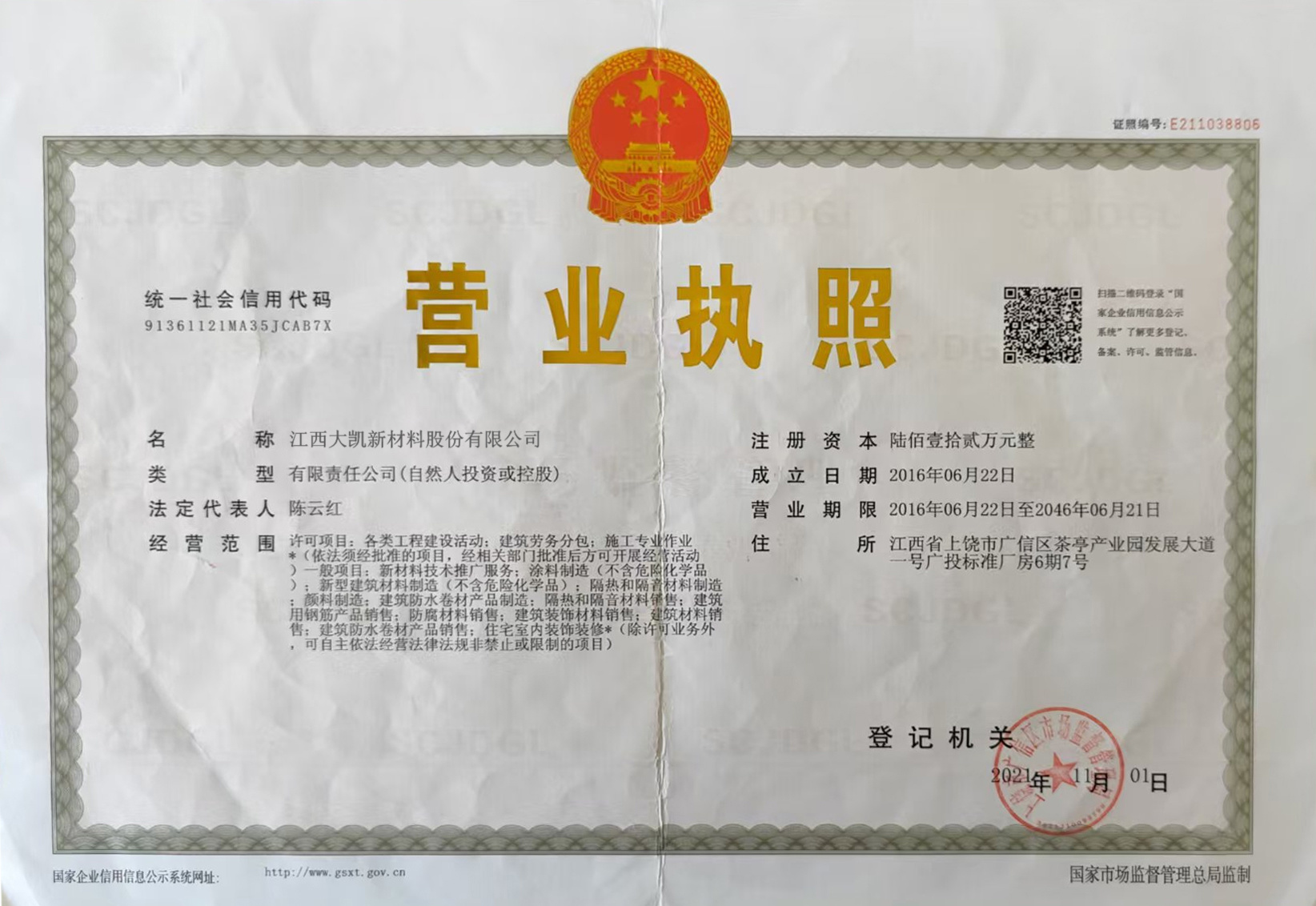
At Jiangxi Dakai New Materials Co., Ltd. , we are at the forefront of this technology. Our comprehensive range of waterproofing agents includes silanes, siloxanes, silicone resins, and reactive silicone fluids for applications across construction, textiles, stone, and beyond. Each product is engineered for consistent performance, backed by rigorous quality control and technical expertise.
Contact us today to learn how our new materials waterproofing agents can protect your project for decades to come.
Related News

The Advantages of Using Silane Based Waterproofing Agents: A Comprehensive Guide
The Advantages of Using Silane Based Waterproofing Agents Table of Contents 1. Introduction to Silane Based Waterproofing Agents 2. What is Silane? 3. How Silane Based Waterproofing Agents Work 4. The Benefits of Silane Based Waterproofing Agents 4.1 Enhanced Durability 4.2 Superior Water Repellency 4.3 Environmentally Friendly Options 4.4 Easy Application Pro
2026-04-02
View Details
Enhancing Material Flexibility with Silicones: From Rigid to Resilient
Discover how silicone additives transform rigid materials into flexible, durable solutions. Learn about mechanisms, applications in plastics, coatings, rubber, and textiles, and how to select the right silicone for your needs.
2026-04-02
View Details
Understanding Potassium Methyl Silicate: A Versatile Chemical Solution
Potassium methyl silicate (KMS) is an inorganic silicate compound that possesses unique properties, making it a versatile ingredient in various industrial applications. This compound is primarily used as a binder and a coating agent due to its excellent adhesion and moisture resistance. Its chemical structure allows it to function effectively in both aqueous and non-aqueous environments, which is
2026-04-01
View Details
Exploring the Benefits of Silicone Hydrophobic Powder in Chemical Applications
Exploring the Benefits of Silicone Hydrophobic Powder in Chemical Applications Table of Contents 1. Introduction to Silicone Hydrophobic Powder 2. Understanding the Properties of Silicone Hydrophobic Powder 3. Manufacturing Process of Silicone Hydrophobic Powder 4. Applications of Silicone Hydrophobic Powder in the Chemical Industry 5. Key Benefits of Using Silicone Hydrophobi
2026-03-31
View Details
Jiangxi Dakai New Materials Co.,Ltd
Telephone:+008619307906792
E-mail:admin@taikay.cn
Address: No. 268, Mingwang Road, High-tech Development Zone, Xinyu City
Website:www.jxtaikay.com/


copyright ©Jiangxi Dakai New Materials Co.,Ltd.