
News Center
News
New Materials Waterproofing Agent: The Next Generation of Protection
2025-11-13
The quest for more durable, efficient, and sustainable building materials is never-ending. In the realm of protection, "New Materials Waterproofing Agent" represents a significant leap forward from traditional bitumen and acrylic-based solutions. But what exactly defines a "new material" in waterproofing, and why should you consider it for your next project?
What is a "New Materials Waterproofing Agent"?
This term refers to a class of advanced chemical formulations, primarily based on reactive silanes and siloxanes (the building blocks of silicones). Unlike older coatings that simply form a physical barrier on the surface, these new materials penetrate deeply into the substrate. There, they undergo a chemical reaction with the building material itself (like concrete, stone, or brick), forming an integral, hydrophobic layer within the pores.
Key Advantages Over Traditional Methods
1.Deep Penetration & Integral Protection: Instead of sitting on the surface where it can be worn away, the protection becomes part of the material, offering long-lasting defense against water ingress.
2.Breathability: A critical advantage. These agents repel liquid water while allowing water vapor to escape. This prevents trapped moisture, which can lead to blistering, spalling, and internal damage like mold and steel corrosion.
3.Invisible & Unaltered Aesthetics: They do not form a visible film or change the natural appearance of the substrate, making them ideal for historic preservation and modern architectural designs where the original look must be maintained.
4.Enhanced Durability & UV Resistance: Being chemically bonded and sheltered within the substrate, the waterproofing effect is highly resistant to UV radiation and weathering, far outlasting surface coatings.
5.Environmentally Friendly Formulations: Many new materials waterproofing agents are solvent-free, have low VOCs, and are more environmentally benign than their predecessors.
Core Technologies Behind the Innovation
The "new material" aspect is driven by chemistry:
1.Silane/Siloxane Chemistry: Small molecules like Methyl Trialkoxy Silane penetrate the deepest. They react to form a water-repellent resin network within the capillaries.
2.Potassium Methyl Silicate & Sodium Methyl Silicate: These are alkaline aqueous solutions that react with atmospheric CO2 to form active polymethylsilicate, a breathable, hydrophobic barrier perfect for mineral surfaces.
3.Methyl Hydrogen Silicone Oil: When used with a catalyst, it can cross-link to form a flexible, hydrophobic film on various surfaces, including fabrics and metals.
Applications of New Materials Waterproofing Agents
1.Concrete Structures: Bridges, parking garages, high-rise buildings.
2.Historic Stone & Masonry: Preserving monuments and old buildings without altering their appearance.
3.Roof Tiles & Wall Claddings: Providing invisible protection against rain and moisture.
4.Industrial Flooring & Basements: Resisting water penetration under hydrostatic pressure.
5.Textiles & Leather: Creating durable water-repellent finishes.
Choosing the Right New Materials Waterproofing Agent
Selecting the correct product depends on your substrate and goal. Key factors include:
1.Substrate Porosity: Dense concrete requires a different penetrative agent than porous sandstone.
2.Desired Surface Appearance: For an invisible finish, a penetrating sealer is essential.
3.Environmental Conditions: Consider freeze-thaw cycles, saltwater exposure, or chemical spills.
Partner with an Innovator in Waterproofing Technology
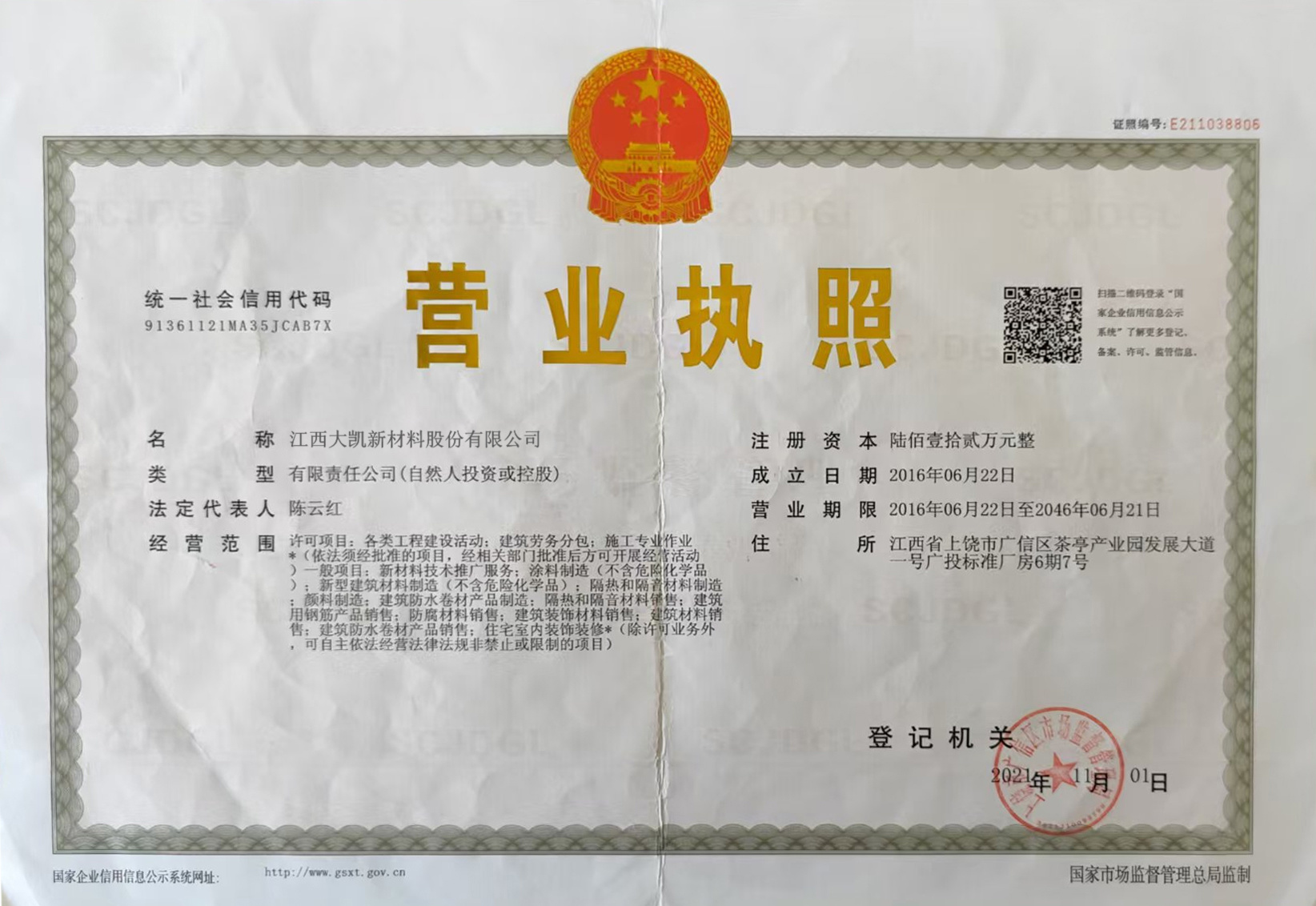
At Jiangxi Dakai New Materials Co., Ltd., our name reflects our mission. We are at the forefront of developing "New Materials" waterproofing solutions. Our product range, including high-purity Methyl Silicate and Methyl Hydrogen Silicone Oil, is designed to provide the next generation of protection that your projects demand.
Move beyond temporary fixes. Embrace the future of durable, breathable, and invisible waterproofing.
Contact us today to find the ideal New Materials Waterproofing Agent for your specific application and request a technical data sheet.
Related News

Hydrophobic vs. Hydrophilic Surfaces: The Science, Differences, and Real-World Applications
Understand the key differences between hydrophobic and hydrophilic surfaces. This guide explains water contact angle, surface energy, and how these properties impact materials science, self-cleaning tech, and biomedical devices.
2025-12-30
View Details
What are the Different Types of Silicone Oils? A Complete Classification Guide
Explore the different types of silicone oils. This guide covers standard, reactive, and specialty silicone fluids like PDMS, amino, phenyl, and vinyl silicones, and their unique applications.
2025-12-25
View Details
Introduction to Silane Coupling Agents: Bridging Organic and Inorganic Worlds
What are silane coupling agents? This introduction explains how they bond organic polymers to inorganic materials like glass, metals, and minerals, enhancing composite performance.
2025-12-23
View Details
Methyl Silicate vs. Ethyl Silicate: Choosing the Right Alkyl Silicate for Your Project
Deciding between Methyl Silicate and Ethyl Silicate? This guide explains their key differences in reactivity, penetration, flexibility, and ideal applications in construction and restoration.
2025-12-18
View Details
Jiangxi Dakai New Materials Co.,Ltd
Telephone:+008619307906792
E-mail:admin@taikay.cn
Address: No. 268, Mingwang Road, High-tech Development Zone, Xinyu City
Website:www.jxtaikay.com/


copyright ©Jiangxi Dakai New Materials Co.,Ltd.